
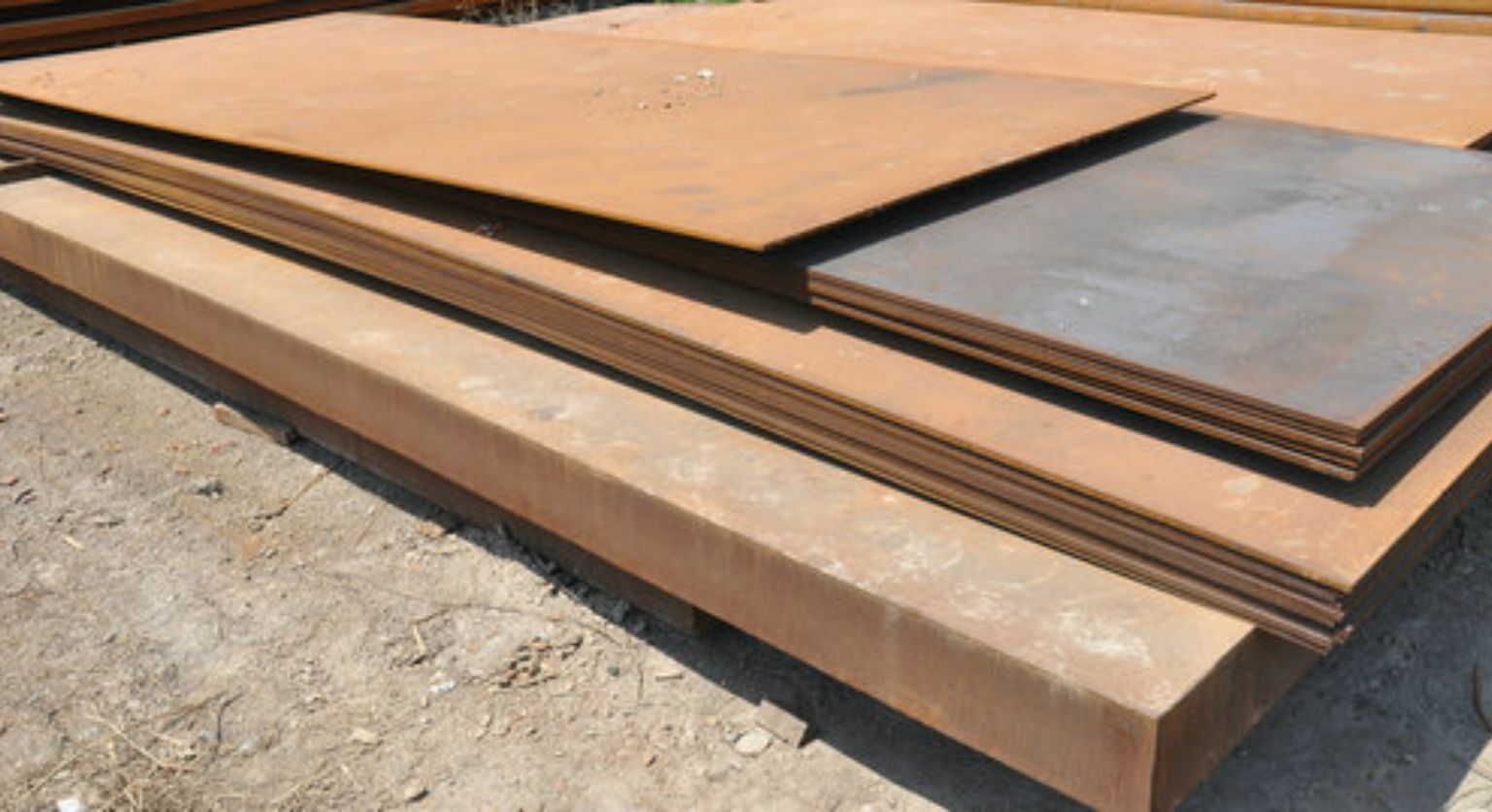
Equipment failure in abrasive environments builds up over weeks of undetected surface loss until a liner cracks, throughput drops, and production halts. Choosing the right heavy duty wear resistant plates at the specification stage prevents that sequence. Wear resistant plates are not interchangeable, and grade, hardness, and thickness must match actual site conditions.
What Are Wear Resistant Plates?
Wear resistant plates are steel plates that are produced to withstand surface deterioration due to abrasion, impact or both. Typical structural steel does not usually have a surface hardness of over 200 BHN, and is subject to continuous abrasive contact. Quenching and tempering of wear resistant steel plates act against this, creating a hard outer surface supported by a tougher core. Surface hardness in industrial wear plates runs from 360 BHN for general applications up to 600 BHN for extreme-duty environments.
Why Selecting the Right Wear Resistant Plate Matters
Improved Equipment Life
Correctly specified wear plates extend liner life by three to five times compared to mild steel, cutting replacement frequency under equivalent abrasive conditions.
Lower Maintenance Costs
Fewer liner changes mean fewer labour hours and less downtime. Each unplanned shutdown costs more than the wear plate that would have prevented it.
Increased Productivity
Worn liners allow material bypass, uneven flow, and vibration, all of which degrade throughput before the plate actually fails.
Better Return on Investment
Over two to three operational years, reduced replacement frequency and lower downtime hours recover the initial cost premium and deliver a net saving.
Key Factors to Consider When Choosing Wear Resistant Steel Plates
Type of Wear
Sliding Abrasion
AR400 or AR450 grades are good for most uses where high hardness is more important than toughness. Conveyor systems and chutes subject plates to continuous low angle contact.
Impact Abrasion
Crushers and other primary mining equipment are subject to repeated high-energy impacts and abrasive contact, demanding plates that are hard but tough enough to resist fracturing.
Combination Wear
In heavy-duty material handling applications, sliding and impact loads occur in parallel, and therefore, a single-mode grade is not enough to ensure a reliable service life.
Hardness Requirements
400 BHN Plates
These suits are general wear applications including conveyor transfers, chute liners, and bucket floors in aggregates processing where abrasion is moderate.
450 BHN Plates
Moderate to severe conditions call for 450 BHN grades, which extend service life where 400 BHN plates show measurable surface loss within six months.
500 BHN Plates
For extreme abrasion environments such as high silica ore handling, 500 BHN plates are required. However, the reduction in toughness makes it necessary to evaluate impact conditions before specifying.
Impact Strength
Mining and quarrying operations deliver impact loads that fracture plates rated only for sliding wear. Applications combining drop impact with grinding abrasion often perform better with 450 BHN grade than with a 500 BHN grade prone to cracking.
Plate Thickness
Thickness depends on expected wear rate and structural load. Industrial applications use plates between 6mm and 80mm, from 10mm for a fine aggregate chute up to 50mm or more for a primary crusher jaw plate.
Operating Environment
Mining deals with coarse high-silica ore and heavy impact. Cement plants add alkaline dust, construction equipment faces mixed ground, and recycling plants handle unpredictable loads from shredded steel and composite waste. Each environment demands a specification built from site data.
Common Types of Abrasion Resistant Plates
AR400 Plates
AR400 covers 360 to 440 BHN and suits general-purpose wear applications, welding without excessive preheat and keeping fabrication costs manageable.
AR450 Plates
At 430 to 480 BHN, AR450 delivers enhanced wear resistance where AR400 shows premature surface loss, benefiting dump truck bodies and loader buckets in hard rock applications.
AR500 Plates
AR500 reaches 470 to 530 BHN for severe abrasion environments. Weldability is reduced at this hardness and controlled heat input during fabrication is non-negotiable.
High Manganese Steel Plates
High manganese grades, typically 11 to 14 percent manganese, work-harden under repeated impact rather than wearing through, making them standard for primary crusher jaws and impact hammer faces.
400 BHN Wear Plates
Positioned as the entry point for dedicated wear protection, 400 BHN plates suit mining and heavy equipment applications where fabrication ease and wear performance must balance.
Applications of Industrial Wear Plates
Mining Industry
Crusher liners, bucket liners, and hoppers consume wear plate rapidly where coarse ore and heavy impact drive high surface loss rates.
Cement Industry
Chutes and conveyors handling raw meal, clinker, and finished cement face fine abrasion in an alkaline environment that accelerates degradation on incorrectly specified grades.
Construction Equipment
Excavator buckets and loader components work through mixed ground, requiring plates that handle edge wear at the cutting lip and body wear across the bucket floor.
Quarrying Operations
Crushing and screening systems handling granite demand high-hardness grades on static liners and tougher grades below feed points where impact loads dominate.
Recycling Plants
Shredders and processing equipment handling steel scrap and mixed construction waste face unpredictable impact, making toughness the priority over peak surface hardness.
Common Mistakes to Avoid When Selecting Wear Plates
Choosing Hardness Alone
Hardness is one variable, not the complete specification. A 500 BHN plate in a high-impact application can fracture where a 450 BHN plate with better toughness would have outlasted it.
Ignoring Application Conditions
Matching plate grade to the operating environment requires knowing abrasive material type, particle size, and impact velocity. Skipping that assessment produces underperformance from day one.
Selecting Incorrect Thickness
Undersized plate reaches its wear limit ahead of schedule while oversized plate adds dead weight and cost without proportional gain in service life.
Overlooking Fabrication Requirements
High-hardness plates require preheat before welding and controlled interpass temperatures to prevent hydrogen cracking. Ignoring this produces weld failures that negate the plate’s wear performance.
Conclusion
Selecting wear resistant plates for industrial applications directly affects equipment life, maintenance budgets, and plant throughput. The right abrasion resistant plates reduce replacement frequency, hold equipment geometry across full production cycles, and generate savings that recover material cost within the first year. Hardness, impact resistance, plate thickness, and operating environment each carry equal weight. Metal Ore provides industrial wear plates and wear resistant steel plates for the most demanding environments, matching grade and specification to actual application requirements.