
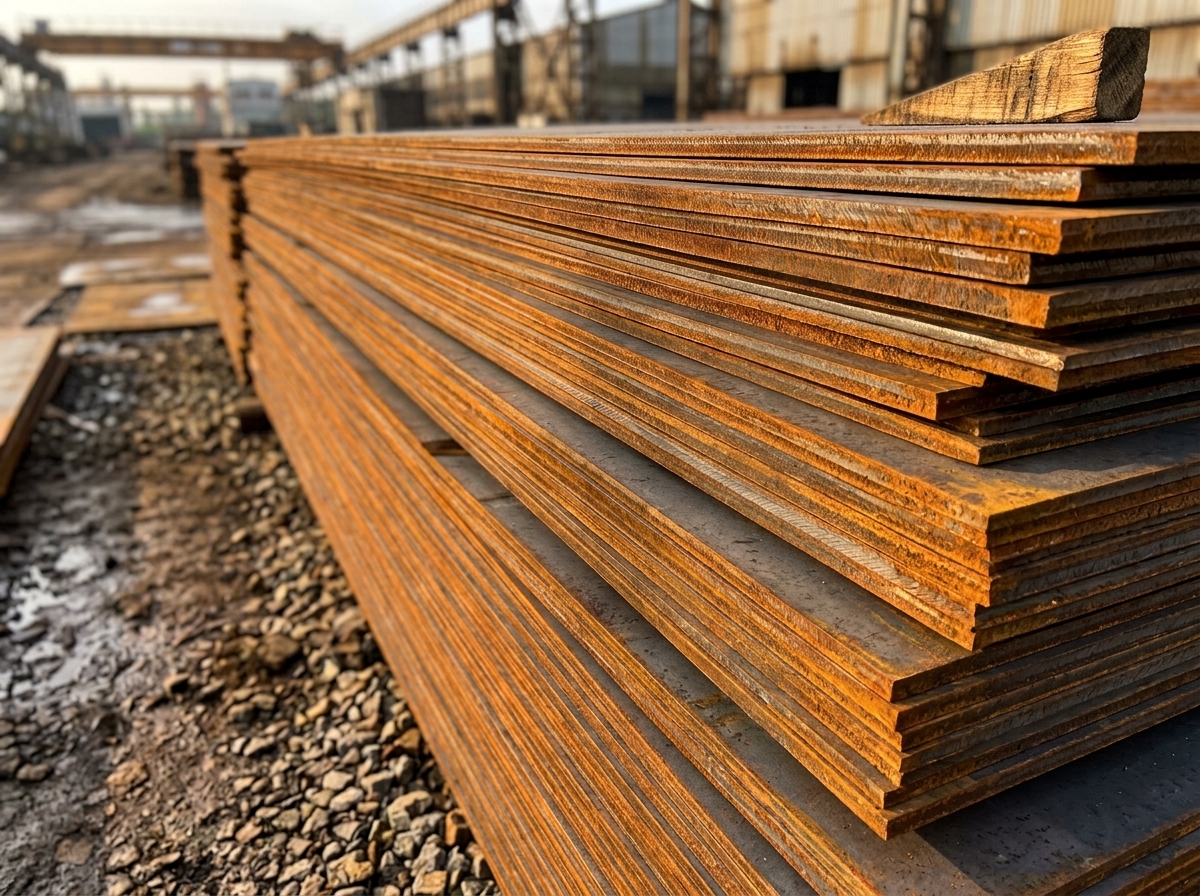
Abrasive industrial environments wear down standard steel fast, and that wear translates directly into downtime and replacement cost. A 400 BHN wear plate carries a Brinell hardness rating of roughly 400, measured by how much resistance the surface offers against a standardized indentation test. That hardness is what lets the plate resist sliding abrasion, impact loading, and surface erosion far longer than conventional structural steel. Equipment running near-continuously under heavy load needs that margin, since every hour of unplanned downtime carries a direct cost in lost production. We see this play out daily across mining, cement, and material handling operations where wear performance decides equipment lifespan more than almost any other spec.
What Are 400 BHN Wear Plates?
A 400 BHN wear resistant steel plate is engineered through controlled heat treatment to reach a hardness level that standard carbon steel never approaches. The Brinell hardness scale measures surface resistance to indentation, and 400 BHN sits well above mild steel’s typical 120 to 150 range. That hardness comes from a quenched and tempered microstructure built specifically to handle friction, sliding abrasion, and impact loading without losing toughness. The result is a plate engineered for severe wear conditions rather than general structural use.
Key Properties of 400 BHN Wear Resistant Plates
High Abrasion Resistance
The hardened surface resists sliding wear, surface erosion, and friction-based material loss in continuous abrasive environments, from rock crushing to bulk ore transfer.
Impact Resistance
Toughness under impact loading matters as much as surface hardness. The plate resists cracking under repeated dynamic loads, holding structural reliability in heavy-duty applications like crusher liners and dump bodies.
Extended Service Life
Wear resistance reduces replacement frequency directly, which cuts downtime and lowers maintenance cost across an operation. Lifecycle cost advantages add up fast once a plant stops swapping liners every few months.
Good Fabrication Characteristics
Weldability stays manageable despite the high hardness, and standard cutting processes apply with the right consumables, giving OEM manufacturers fabrication flexibility without specialized tooling.
How 400 BHN Wear Plates Improve Equipment Service Life
Surface wear reduced
The toughened surface dramatically reduces material loss in high friction situations. Its outstanding abrasion resistance helps keep essential part dimensions closer to spec, thereby extending service intervals and minimizing structural damage.
Lower Maintenance Requirements
A surface that is resistant to severe abrasion immediately results in fewer shutdowns and less maintenance intervention. “Plants save labor and replacement costs instead of watching their standard steel plates get thin every quarter.
Improved Equipment Reliability
Wear-resistant components increase operating efficiency across longer production cycles. The dimensional correctness and the core structural integrity resist continuous, severe structural stresses, therefore reducing unexpected mechanical breakdowns.
Better Performance in Harsh Environments
Mining operations, cement plants, quarries, bulk handling systems and earthmoving machinery all subject equipment to abrasive conditions. 400 BHN plates provide dependable durability where conventional structural steel rapidly fails.
Common Industrial Applications of 400 BHN Wear Plates
Mining buckets, dump truck bodies, excavator components, crushers, hoppers, chutes, conveyor liners, cement plant machinery, earthmoving equipment, loader buckets, and industrial liners all rely on 400 BHN plate. Each application shares the same demand: constant material contact under friction or impact that would strip standard steel within months and force a shutdown mid-shift.
400 BHN Wear Plates vs Conventional Steel Plates
|
Feature |
400 BHN Wear Plate |
Conventional Steel Plate |
| Hardness | High (≈400 BHN) | Low (120-150 BHN) |
| Abrasion Resistance | Excellent | Poor |
| Service Life | Extended | Short under abrasive load |
| Maintenance Frequency | Low | High |
| Operational Reliability | High | Variable |
| Lifecycle Cost | Lower over time | Higher due to replacement |
Standard structural steel fails faster in abrasive industrial environments because it lacks the hardened, wear-resistant surface that 400 BHN plate is engineered to deliver.
Industries Driving Demand for 400 BHN Wear Resistant Plates
The mining industry, construction sector, cement manufacturing, steel processing plants, recycling industries, material handling operations, and quarrying industries all drive consistent demand for 400 BHN wear plate, each running equipment through the same abrasive duty cycles.
Why Industrial Buyers Choose 400 BHN Wear Plates
400 BHN wear plates are the choice of industrial buyers because of their strength and the long-term savings they provide. The plates greatly reduce machine downtime and help prevent early component failure. This has a direct impact on plant efficiency – a boon for large industrial operations that run several continuous shifts.
In addition, the superior wear resistance in different thicknesses and dimensional sizes allows original equipment manufacturers (OEMs) and plant maintenance teams to customize the plate to specific application stress profiles. This perfect matching removes the expensive over-specification process, maximizing material efficiency without sacrificing structural performance.
Conclusion
Corten steel sheets have a unique combination of strong durability, changing look and low maintenance, making them very ideal for use in modern building. Purchasers looking for the material for their project should check out certified suppliers like Tata Steel, JSW Steel and Metal Ore first to find out the grade of steel to utilize. With sustainable design continuing to increase in popularity, corten steel will surely continue to be an important part of skylines for many decades to come.