
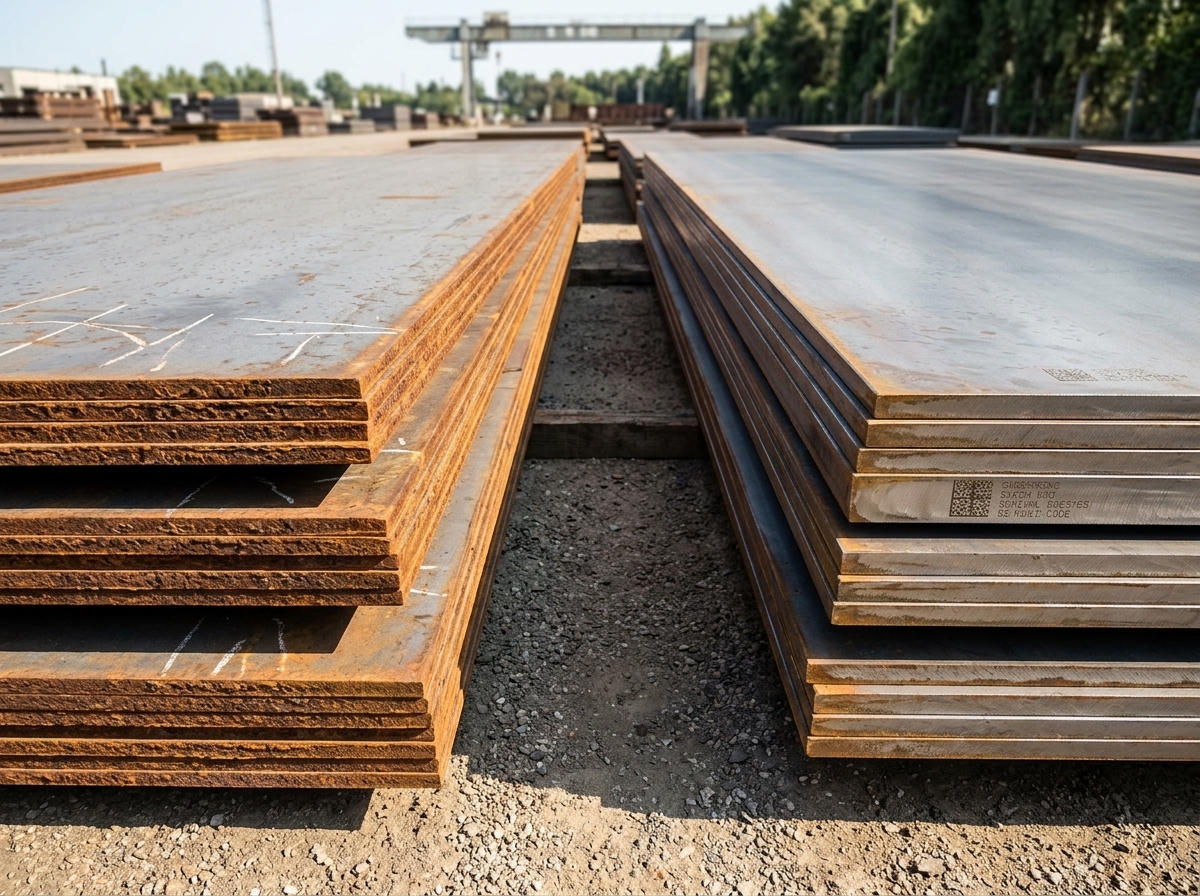
Steel plates support nearly every industrial sector. Walk through a refinery, a power plant, or a bridge construction site, and you encounter them in structural frames, pressure vessels, boilers, and heavy machinery. Picking the wrong plate material risks structural failure, accelerated corrosion, and costly shutdowns. Two categories are dominating the procurement decisions: alloy steel plates and carbon steel plates. Both are iron-based, but their composition and performance differ in ways that engineers care about. Steel plates are widely used in construction, boilers, pressure vessels, pipelines, and industrial machinery because of their strength and ease of fabrication.
What Are Alloy Steel Plates?
Alloy steel plates are made from iron and carbon with the deliberate addition of chromium, nickel, molybdenum, vanadium, or tungsten. Every element responds to a particular performance gap. Chromium provides corrosion resistance, molybdenum increases the steel’s creep strength under long-term heating, and nickel improves low-temperature toughness. Typical ASTM alloy steel plate grades include A387 for pressure vessel service, A514 for high-yield structural use, and A517 for elevated-temperature boiler duty. Alloy steel plates include other alloying elements such as chromium, nickel, and molybdenum, which enhance strength, heat resistance and corrosion resistance.
What Are Carbon Steel Plates?
The main constituents of carbon steel plates are iron and carbon, with only small amounts of manganese and silicon. Mild steel has less than 0.25% carbon and bends easily and welds cleanly at a reasonable price. Medium carbon steel, 0.25% to 0.60%, is stronger but requires greater care in welding. Carbon steel is mainly iron and carbon, with very little in the way of alloying elements. It is used for structural and moderately elevated temperature applications.
Key Differences Between Alloy Steel Plates and Carbon Steel Plates
Composition Difference
Carbon steel is a simple material made up of iron, carbon, and very small amounts of other elements. Controlled amounts of chromium, nickel and molybdenum are added to alloy steel plates to achieve specific mechanical or chemical properties. The main difference is these alloying additions that take a predictable structural material and make it a precisely engineered one.
Mechanical Strength Comparison
Grade A514 alloy steel plate delivers a minimum tensile strength of 690 MPa. Standard carbon structural plate is closer to 400 to 480 MPa. Beyond raw tensile numbers, alloy steel plates absorb impact energy at sub-zero temperatures without brittle fracture and resist surface wear under abrasive loading. Alloy steels are generally stronger and tougher than conventional carbon steel plates. This makes it the preferred material where load cycles, impact events or dynamic stresses are part of the operating reality.
Heat Resistance and High-Temperature Performance
At temperatures above 400°C, standard carbon steel loses tensile strength and creep resistance at a measurable rate. Chromium-molybdenum grades such as A387 Grade 11 and Grade 22 sustain mechanical properties through continuous service up to 600°C. Alloy steel plates perform better in extreme heat and pressure conditions than standard carbon steel plates, as alloying elements stabilize the carbide structure and resist grain coarsening.
Corrosion Resistance
Exposing carbon steel plate to moisture or chemical media and oxidation begins within hours. Chromium additions of 1% to 9% form a passive surface layer that resists oxidation at elevated temperatures. Alloy Steel Plates Alloy steels are known for their added resistance to corrosion with the addition of alloying elements such as chromium and molybdenum which are critical in offshore, coastal or chemical plant environments.
Weldability and Fabrication
Carbon steel plates join with minimal pre-treatment using standard MIG or SMAW without preheat. Alloy steel plates require controlled preheat between 150°C and 250°C, plus post-weld stress relief to prevent hydrogen cracking. Alloy steel requires controlled fabrication processes to retain the properties that were engineered into it, while carbon steel is often easier to weld and fabricate.
Cost Comparison
Carbon steel plates are more economical to procure. Prices are down because of lower alloy content, less complex smelting chemistry and more global output. The initial cost of carbon steel plates is lower, and alloy steel has increased durability and life cycle performance. A pressure vessel in A387 alloy steel running 25 years without re-lining delivers better value than one in carbon steel demanding major maintenance at year 12.
Alloy Steel Plate vs Carbon Steel Plate: Application Comparison
Alloy Steel Plate Applications
Refineries and petrochemical plants specify alloy steel plates for reactor shells and pipework handling hydrogen-rich media at 450°C to 550°C. Grade Chromium-molybdenum steels are used in power plants for boiler drums and steam headers. High strength alloy steel plates for impact toughness at low ambient temperatures are required for offshore structures. Pressure vessel fabricators working to ASME Section VIII select ASTM alloy steel plates to meet the elevated-temperature and pressure retention requirements of the code mandates.
Carbon Steel Plate Applications
Structural fabrication accounts for the largest consumption of carbon steel plate globally. Bridge girders, building frames, and crane structures require predictable yield strength and economical supply. Carbon steel plate is used for water and petroleum product storage tanks because the service temperature is never high enough to bring the material close to its thermal limits. Carbon steel plates are widely used in construction, bridges, machinery, and industrial fabrication due to their low cost and versatility in applications where the operating temperature is below 300°C.
Alloy Steel vs Mild Steel
Mild steel contains up to 0.25% carbon and has a yield strength of approximately 250 MPa. It can be bent, cut, and welded easily. Alloy steel plates have a yield strength of 550 MPa to 690 MPa and a heat resistance of 200°C to 350°C before the tolerances of mild steel are exceeded and strength degradation occurs. Mild steel is good for ductility and weldability, alloy steel is better for strength, hardness and temperature resistance.
Which Steel Plate Is Better for Industrial Applications?
The answer depends on the service environment. Applications operating above 350°C, handling corrosive media, carrying high dynamic loads, or meeting ASME or PED pressure vessel codes need alloy steel plates. Budget-sensitive structural projects and general fabrication perform well with carbon steel plate. When operating temperature climbs, the chemical environment turns aggressive, or pressure duty exceeds what standard carbon steel handles safely, alloy steel becomes the correct specification.
Conclusion
Alloy steel plates and carbon steel plates serve the same fundamental purpose at very different performance levels. Carbon steel delivers cost-effective strength for structural and general engineering work. Alloy steel plates step in when heat, corrosion, pressure, or mechanical demand exceeds what carbon steel handles reliably. The composition gap, driven by chromium, nickel, molybdenum and vanadium, translates directly into differences in tensile strength, service temperature, corrosion life, and fabrication behaviour. Alloy steel plate manufacturers provide grades for conditions where carbon steel is inadequate, for procurement teams sourcing plates for refineries, pressure vessels, boilers, or heavy machinery. Get accurate technical advice and pricing by telling MetalOre your grade, thickness specifications, and quantity.