
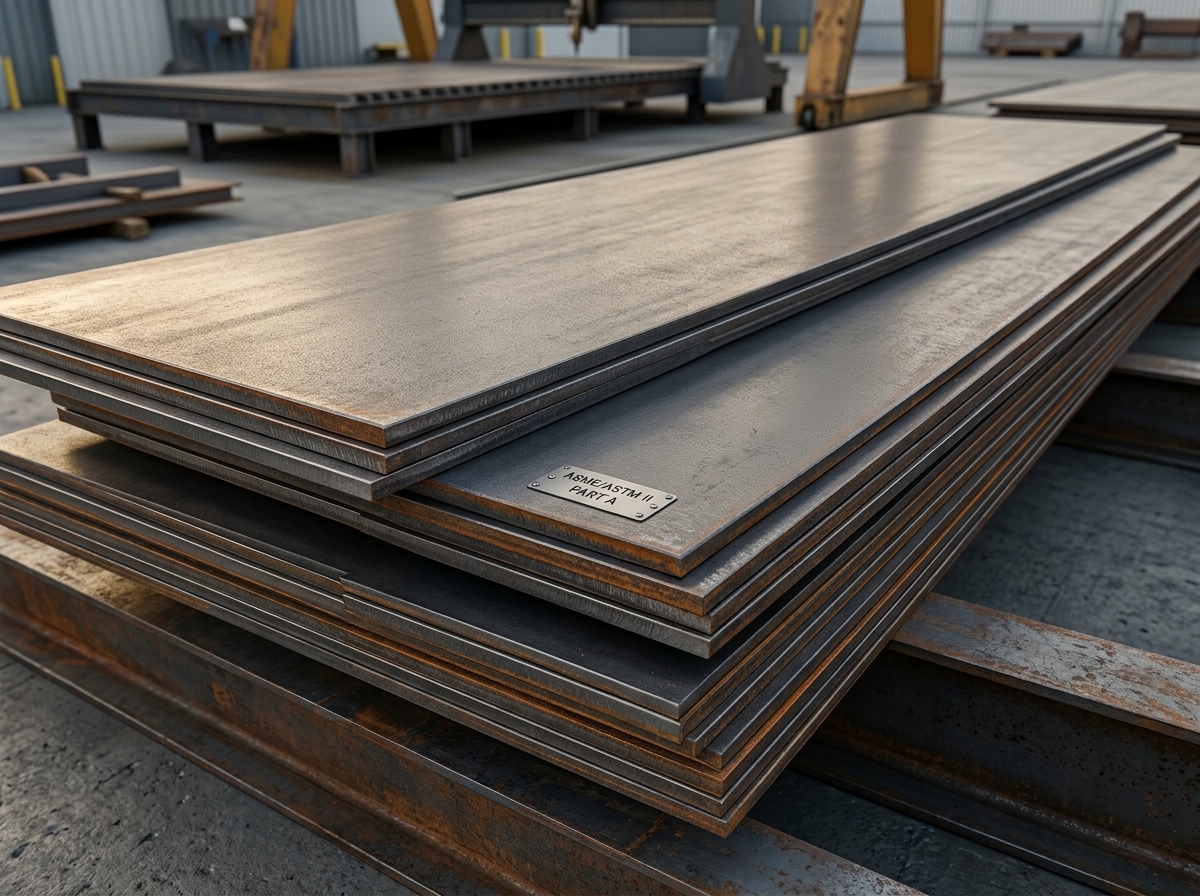
Pressure equipment fails when the steel beneath it cannot hold. Boilers crack, reactor vessels fatigue ahead of schedule, and heat exchangers corrode from the inside out when fabricators choose plates that cannot handle sustained thermal and mechanical stress. SA 387 GR 12 CL 2 plates solve this directly. Built from a chromium-molybdenum alloy with chromium at 1.00 to 1.50 percent and molybdenum at 0.45 to 0.60 percent, these plates deliver the elevated-temperature strength, oxidation resistance, and creep performance that pressure vessel manufacturers depend on. When equipment runs continuously above 400°C under pressures that compromise standard carbon steel, SA 387 GR 12 CL 2 becomes the grade engineers specify.
What Are SA 387 GR 12 CL 2 Plates?
ASTM A387 and its ASME counterpart SA 387 cover chromium-molybdenum alloy steel plates for welded pressure vessels and boilers. Grade 12 sits within a family spanning Grades 2 through 91, each calibrated for a specific thermal and pressure range. Class 2 is one step above. Class 1 requires a minimum tensile strength of 515 MPa, while Class 2 increases this to 620 MPa, with a minimum yield strength of 515 MPa. Class 2 is the one to go for when structural requirements are more demanding, and safety factors have to be kept tighter. The chrome-moly chemistry avoids carbide precipitation at sustained temperatures and maintains grain structure stability well beyond the limits of plain carbon steel. ASME SA 387 GR 12 CL 2 plates meet ASME Section II material specs without any modification for engineers specifying pressure vessel steel plates for use in boilers, heat exchangers or reactor service.
Key Properties That Make These Plates Ideal for Pressure Equipment
High Temperature Strength
SA 387 GR 12 CL 2 plates hold tensile strength at temperatures where carbon steel grades begin to lose load-bearing capacity. In boiler drums, pressure vessels, and heat exchangers, metal wall temperatures sustain between 450°C and 550°C for thousands of operating hours. The chrome-moly matrix stabilises at these temperatures rather than softening progressively, which is why fabricators across oil and gas default to this grade over low-carbon alternatives.
Corrosion and Oxidation Resistance
Chromium at 1.00 to 1.50 percent builds a passive oxide layer that resists scaling in high-temperature gas and steam environments. Molybdenum adds resistance to pitting in process streams carrying chlorides or Sulphur compounds, both common in petrochemical service. Carbon steel in comparable duty requires weld repair or section replacement within 8 to 12 years; ASTM A387 Grade 12 Class 2 alloy steel plates in the same environment regularly exceed 20 years.
Excellent Weldability
Pre-heat requirements for SA 387 GR 12 CL 2 sit at 150°C minimum under most ASME welding procedure specifications. Post-weld heat treatment in the 650°C to 720°C range relieves residual stresses and restores toughness at the heat-affected zone. Fabricators working with these Chrome Moly Plates find they respond predictably to GTAW, SMAW, and SAW processes, keeping large-format vessel fabrication practical.
Pressure Handling Capability
Creep shortens vessel life and raises inspection frequency. Molybdenum content in SA 387 GR 12 CL 2 retards creep onset measurably. At 500°C under boiler drum service stresses, Grade 12 Class 2 maintains dimensional stability across 100,000-hour design lives, the benchmark most ASME pressure equipment standards require.
Common Pressure Equipment Applications
Oil and gas: Upstream separators, gas scrubbers, and hydrotreater reactors run at 100 to 300 bar with hydrogen-rich streams. SA 387 GR 12 CL 2 pressure equipment applications span vessel shells, end caps, and transition cones where wall temperatures breach standard material limits.
Petrochemical plants: Ethylene crackers and catalytic reformers run above 450°C and are subjected to cyclic thermal loading. Refinery alloy steel plates must withstand this cycling without stress cracking at nozzle intersections, a problem that Grade 12 Class 2 addresses with its stable alloy carbide structure.
Power generation: Steam drum fabrication for power plant boilers uses ASME SA 387 GR 12 CL 2 plates rated for 100 to 180 bar, meeting ASME Boiler and Pressure Vessel Code Section I requirements for fired vessels.
Fertilizer plants: High-pressure urea synthesis converters and ammonia loops run above 200 bar with continuous hydrogen exposure. Boiler quality alloy steel plates at Class 2 strength deliver the hydrogen attack resistance these environments demand.
Chemical processing: Chlorination reactors and high-pressure hydrogenation units fabricated from heat resistant SA 387 GR 12 plates achieve longer inspection intervals, cutting lifecycle cost against carbon steel alternatives.
Advantages Over Conventional Carbon Steel Plates
A516 Grade 70 family carbon steel plates are good for service temperatures up to about 700F. At higher levels, oxidation rates increase, creep occurs over shorter time scales, and tensile strength drops below design allowable prior to the equipment’s designed life. SA 387 GR 12 CL 2 plates extend the usable temperature window to 550°C. Operational life extends by 40 to 60 percent in power plant boiler drum comparisons. When fabricators calculate total cost across a 25-year plant life, the material premium for Grade 12 Class 2 returns savings in shutdown frequency, weld repair expenditure, and unplanned downtime.
Why Manufacturers Prefer SA 387 GR 12 CL 2 Plates
This grade is specified by fabricators throughout India, the Middle East and Southeast Asia as it is shipped in thicknesses ranging from 6 mm to 200 mm with mill certification to ASME Section II Part A. Multiple heat treatment conditions, normalized and tempered, and quenched and tempered, allow procurement teams to match incoming plate condition to fabrication schedules without additional processing. The documentation packages for the SA 387 GR 12 CL 2 plate exporter include mill test reports, third-party inspection certificates, and NACE MR0175 compliance records. This grade is the most common choice for contractors sourcing Boiler Quality Plates in bulk, as it is ASME, PED and IBR compliant and exportable to GCC and European projects.
Industries Driving Demand for SA 387 GR 12 CL 2 Plates
Energy sector: Power generation expansion across South Asia and the Middle East sustains strong demand for chrome-moly plate in steam drum and super heater fabrication.
Heavy engineering: OEMs building pressure vessels for EPC contractors require consistent mechanical properties across large plate formats, which Grade 12 Class 2 delivers batch after batch.
Industrial process equipment: Alloy steel is used for reactor and heat exchanger fabrication in chemical and polymer plants where the cost of shutdowns is more than the material premium.
Offshore and refinery infrastructure: Subsea and topside pressure vessels for offshore platforms and onshore refinery expansions default to SA 387 GR 12 CL 2 plates for service conditions between Grade 11 and Grade 22 windows.
Conclusion
SA 387 GR 12 CL 2 plates earn their position as the preferred material for pressure equipment manufacturing through performance that code bodies and plant operators can measure. The chromium-molybdenum chemistry delivers 620 MPa minimum tensile strength, creep stability across 100,000-hour design lives, and oxidation resistance up to 550°C. Fabricators return to this grade because it performs within ASME code limits and extends equipment life beyond what carbon steel achieves at the same service conditions. MetalOre stocks SA 387 GR 12 CL 2 plates across a full thickness range with complete mill documentation. Contact the MetalOre team for specifications, cut sizes, pricing, and delivery schedules on your next pressure equipment project.