
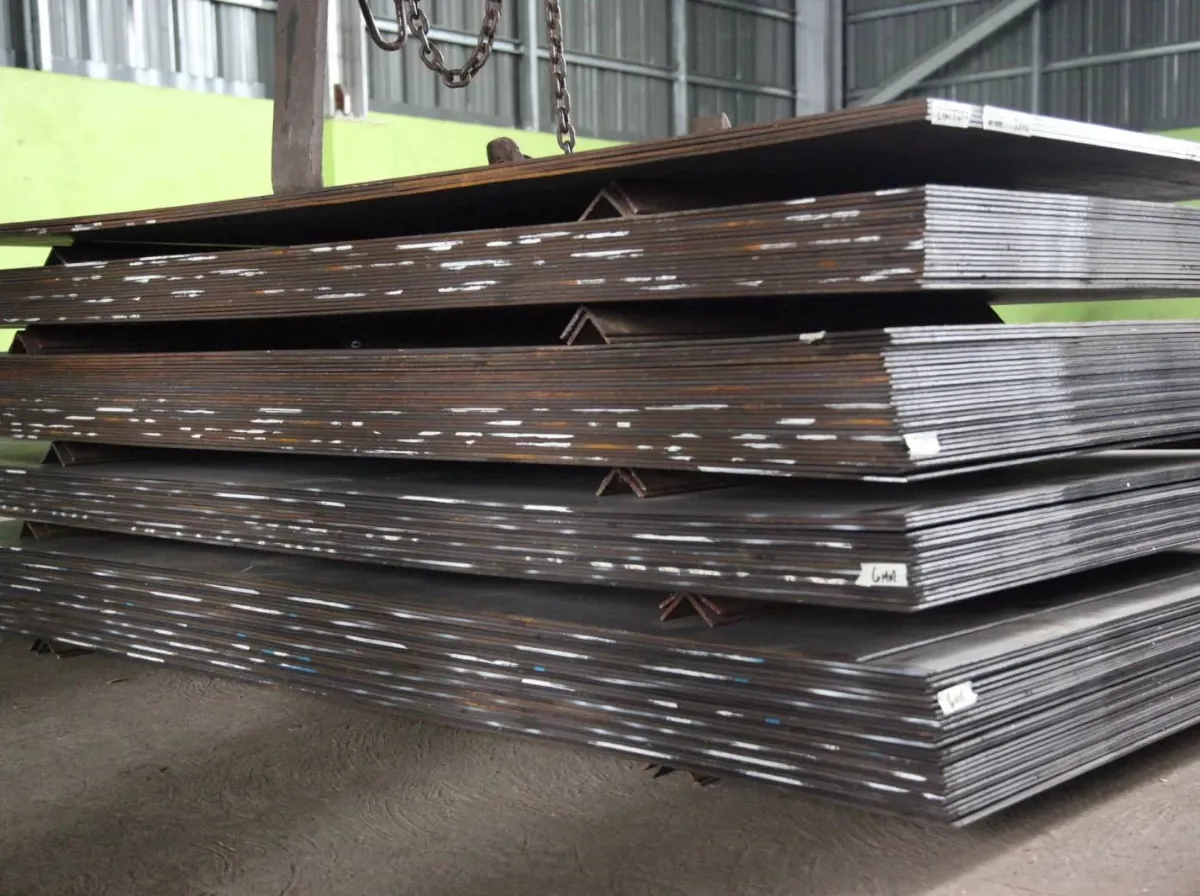
Mild steel is a type of carbon steel. The two terms get confused because they describe different points within the same broader category. Both plates serve construction, fabrication, and industrial work across similar-looking applications. The main distinction is carbon content. It influences mechanical properties, weldability, and the applications suited to each grade. Understanding that relationship helps buyers pick the plate that fits the job rather than defaulting to whichever name sounds more familiar.
What Are Mild Steel and Carbon Steel Plates?
What Are Mild Steel Plates?
Mild steel plates are low-carbon steel products valued for formability, weldability and general fabrication work. We at MetalOre supply MS plates for exactly that range of use, where structural components, machinery frames, and construction work all draw on the same weld-friendly, easily formed base material. Mild steel is widely used across construction and fabrication due to its ductility, weldability, and versatility. For a detailed understanding of its properties and applications, refer to our guide on Mild Steel Plates.
What Are Carbon Steel Plates?
Carbon steel plates carry carbon as their principal alloying element, and their properties shift with how much of it the grade contains. Three broad classifications split the family: low-carbon, medium-carbon and high-carbon steel, each covering a different carbon range and a different balance of properties. Strength, hardness, ductility, and weldability vary by grade and composition. Therefore, “carbon steel” alone does not specify a single set of mechanical properties.
Mild Steel vs Carbon Steel Plates: Key Differences
Carbon content sets the baseline difference between the two. Mild steel is generally considered low-carbon steel, often containing about 0.05% to 0.25% carbon. Carbon steel, as a broader category, includes low-, medium-, and high-carbon grades, with ranges varying by classification system.
Carbon content also affects mechanical properties. Higher carbon grades are stronger than mild steel. Hardness is similar from mild steel to mid- to high-carbon grades. Ductility decreases with increased carbon concentrations. Mild steel is easier to mold than high-carbon steels. Weldability: In general, the higher the carbon concentration and hardenability, the lower the weldability. Mild steel is more readily weldable by conventional welding methods. Higher carbon grades may require preheating or regulated cooling or any other method to avoid cracking.
| Comparison Parameter | Mild Steel Plates | Carbon Steel Plates |
| Carbon Content | Approximately 0.05% to 0.25% | Spans 0.05% to 1.5% across low, medium and high-carbon grades |
| Classification | A subset of low-carbon steel | Covers low-, medium- and high-carbon classifications |
| Strength | Moderate | Increases with carbon content, reaching higher levels in medium- and high-carbon grades |
| Hardness | Lower | Increases with carbon content |
| Ductility | High | Decreases as carbon content rises |
| Weldability | Good with standard procedures | Decreases in medium- and high-carbon grades, often needing preheat or controlled cooling |
| Common Applications | General fabrication, structural components, machinery | Ranges from general fabrication to high-strength or wear-resistant components, depending on grade |
| Material Selection | Suited to general-purpose, weld-intensive work | Suited where specific strength or hardness beyond mild steel is required |
Understanding the difference between Mild Steel and Carbon Steel Plates also helps explain their different applications. Mild steel covers general fabrication, structural work, and machinery parts where weldability matters most. Carbon steel also covers applications requiring higher strength, hardness, or wear resistance. These properties depend on the selected grade and its processing.
Which One to Choose: Mild Steel or Carbon Steel Plates
The difference between Mild Steel and Carbon Steel Plates becomes important when selecting material for a specific application. The choice should match the carbon content, grade, strength, and fabrication requirements. We at MetalOre walk buyers through the same handful of factors on nearly every order.
- Required strength and hardness for the load the component carries
- Carbon content and material grade needed to meet that load
- Formability and fabrication requirements, since extensive bending favours mild steel’s ductility
- Welding requirements, since weld-intensive assemblies in higher-carbon grades need preheat and controlled cooling
- Plate thickness and dimensions set by the structural calculation
- Applicable material standards the project can specify and certify against
- Budget and project specifications weighed against what the application genuinely requires
Conclusion
Mild steel is generally a low-carbon form of carbon steel. Higher-carbon grades offer different levels of strength, hardness, ductility, and weldability. Mild steel offers good formability and weldability for general applications. The broader carbon-steel family includes grades with substantially different mechanical properties. Selecting the appropriate grade based on the project’s actual strength, fabrication, and budget requirements remains the deciding factor either way.