
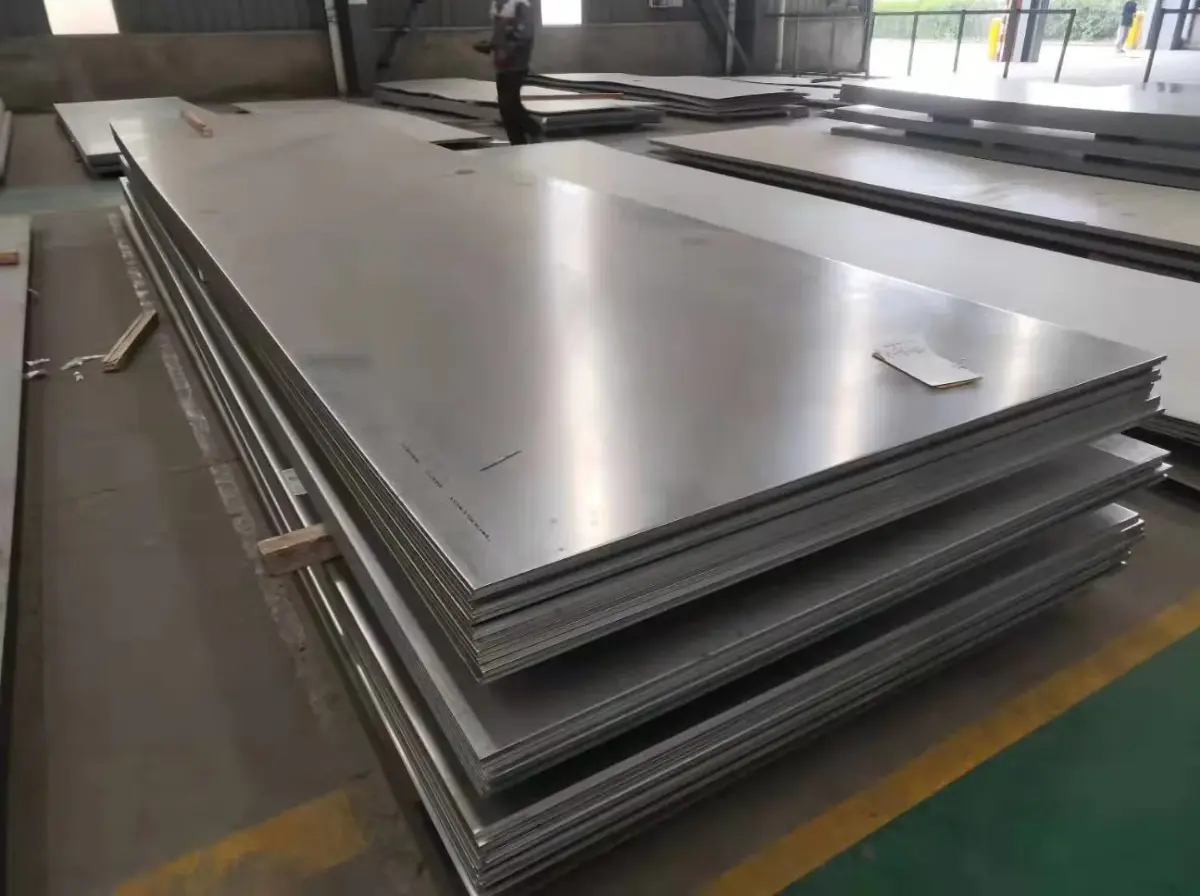
E350 steel plate has a minimum yield strength of 350 MPa under IS 2062. This makes it suitable for structural applications requiring higher strength than lower-grade structural steels. Engineers specify E350 where structural weight and material efficiency are important. Its higher yield strength can allow thinner sections than lower-strength grades, subject to design calculations. We at MetalOre supply IS 2062 E350 Plates into exactly that higher-strength bracket, where thinner sections carrying heavier loads make the grade worth specifying over the standard structural grade. This blog covers where E350 earns its place across buildings, industrial equipment, infrastructure and transportation work, and what to check before selecting it.
Understanding the Role of E350 Steel Plates in Structural Engineering
E350 steel plates have a minimum yield strength of 350 MPa and a minimum tensile strength of 490 MPa under IS 2062. The specified maximum carbon content is 0.20%. E350’s higher yield strength can support more material-efficient structural designs. Actual thickness and steel quantity depend on the structural design and applicable loads. A 350 MPa yield strength does not define the complete performance requirement. Impact toughness can also be important in structural applications. IS 2062 sub-grades A, BR, BO, and C specify different impact-toughness requirements. Sub-grade A does not require an impact test. BR requires a minimum absorbed energy at room temperature, while BO applies the requirement at 0°C. Sub-grade C is intended for lower-temperature service. Selecting the right sub-grade depends on the operating environment and loading condition as much as the base strength figure does. For a better understanding of its properties, composition, and specifications, refer to our guide on E350 grade steel.
Applications of E350 Steel Plate in Building Construction
E350 steel plate is used in building structures where higher yield strength can improve structural efficiency. Its suitability depends on the design loads, member geometry, and applicable standards. At Metalore, we supply high-grade E350 steel plates across diverse construction sectors where structural efficiency, long spans, and overall material optimization are paramount:
- Commercial Buildings: Enables sleeker column and beam profiles, maximizing usable interior floor space while maintaining high load capacity.
- Industrial Facilities: Supports heavy machinery and high-load frameworks where structural steel strength is critical for safe daily operations.
- Warehouses & Factory Sheds: Provides economical, high-strength structural framing across expansive open-plan layouts and long spans.
- Multi-Storey Frameworks: Delivers a superior strength-to-weight ratio over standard grades, reducing foundation loads and overall steel consumption.
Industrial Uses of E350 Steel Plates
Industrial equipment puts E350’s strength to work wherever heavy loads concentrate on structural members built from plate rather than rolled sections. The grade shows up consistently across:
- Heavy machinery and equipment that load structural frames beyond what E250 comfortably carries
- Industrial platforms and support structures designed for sustained heavy loading
- Material handling systems where structural components see repeated dynamic load
- Power plant structures that combine high load with demanding operating conditions
E350 Steel Plates in Infrastructure and Transportation Projects
Infrastructure projects draw on E350 for components where higher strength reduces section size without compromising the design load. E350 can be specified for bridge components where design loads require higher-strength structural steel. Longer spans may also make material efficiency an important design consideration. Railway infrastructure applies the same logic to structures carrying heavy, repeated dynamic loads, where fatigue performance matters alongside static strength. Fabricated structural components across both sectors round out the use, built from E350 wherever the load calculation favours it over a lower-strength alternative.
How to Select E350 Steel Plates for Different Applications
E350 selection should start with the structural load calculation. Its higher yield and tensile strength can support designs requiring greater material strength. Confirm the required plate thickness and dimensions against the design calculations. Then select the appropriate A, BR, BO, or C sub-grade based on temperature and loading conditions. Fabrication and welding procedures need review too, since higher-strength structural steel can call for different weld parameters than mild steel. Review the material test certificate to verify compliance with the specified IS 2062 grade. Confirm the supplied plate meets the required chemical and mechanical properties.
Conclusion
E350 steel plate is used in buildings, industrial equipment, infrastructure, and transportation structures because it provides a minimum yield strength of 350 MPa. Its higher strength can support efficient structural designs when confirmed by engineering calculations. Its sub-grades extend that strength with impact-toughness requirements suited to different operating temperatures and loading conditions. Selecting the right sub-grade, thickness and certification remains the step that decides whether a given E350 plate performs as the structural calculation assumes.