
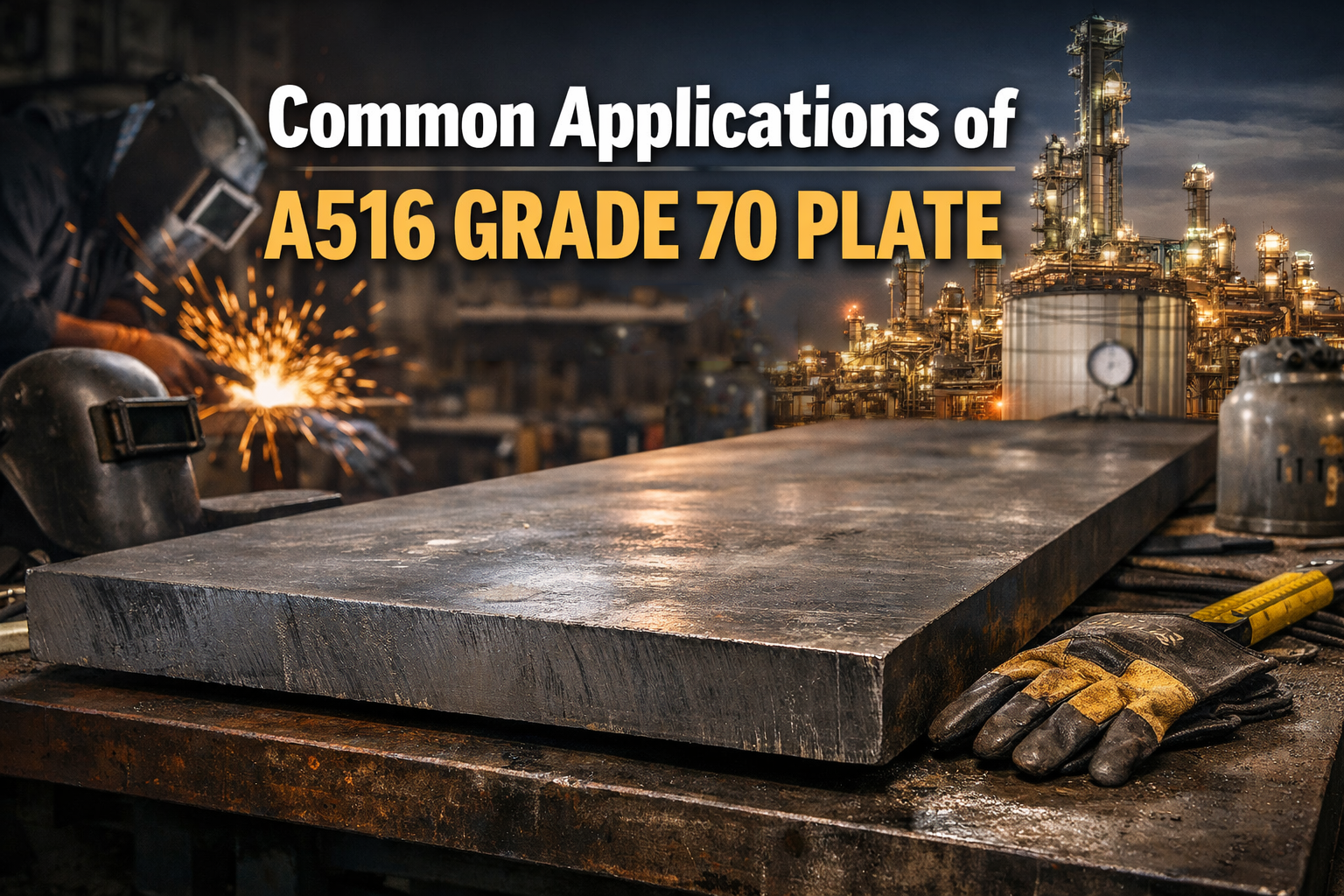
A516 Grade 70 plate is a high-strength and low-alloy carbon steel plate that finds its application in a wide range of industries. This steel plate is significantly more durable and tough than conventional mild steel plates and is used in high-risk environments requiring immense strength and corrosion resistance. This blog post will discuss the common applications of the A516 Grade 70 Plate in different industries. So, let’s dive in and explore.
What is A516 grade 70 Plate?
A516 Grade 70 plate is a pressure vessel grade steel used in moderate and lower temperature service. It contains manganese, phosphorus, sulfur, and silicon at the highest levels allowed by the ASTM to produce the strongest carbon steel plates specified by the ASTM. It is widely used as an economical and highly efficient material for construction applications such as bridges, buildings, outdoor equipment, storage tanks, and railways. This high-strength alloy offers excellent low-temperature toughness for fabrication of various components subject to impact or vibration.
Applications & Uses of A516 grade 70 plate
Petrochemicals and Oil Industries:
A516 Grade 70 Plate is extensively used in the petrochemical and oil industries due to its exceptional strength, corrosion resistance, and high-temperature tolerance. The A516 Grade 70 Plate manufacturing involves a process called normalized, which makes this steel plate exceptionally robust. These properties make it perfect for use in pipelines, storage tanks, and other high-pressure applications that require safe and reliable performance.
Nuclear Power plants:
The A516 Grade 70 plate has a low carbon content, making it ideal for Nuclear power plants. The steel plate is well suited for nuclear reactors due to its exceptional strength and high-temperature tolerance, making it perfect for handling the high pressure and temperature of steam generation processes.
Boiler and Pressure vessels:
One of the most common applications of A516 Grade 70 Plate is manufacturing boilers and pressure vessels. The high-strength steel plate is perfect for use in these industries, where safety and durability are critical factors. The A516 Grade 70 Plate is an excellent choice for applications where the pressure vessel requires exceptional toughness, resistance to cracking, and high-temperature tolerance.
Construction Industry:
The A516 Grade 70 Plate is widely used in construction due to its high strength, durability, and corrosion resistance. This steel plate is commonly used to construct bridges, buildings, heavy machinery, and other infrastructure projects. Its excellent mechanical properties make it popular for use in heavy-duty equipment where high strength and toughness are crucial.
Offshore Platforms:
The A516 Grade 70 Plate is also commonly used in the offshore industry, where the steel plate requires high corrosion resistance, toughness, and strength. The offshore environment presents harsh conditions, which makes the A516 Grade 70 Plate perfect for use in the construction of offshore platforms, oil rigs, and other structures.
Conclusion:
A516 Grade 70 Plate is a versatile and durable high-strength steel plate that finds its use in various high-risk environments. Its unique properties make it an excellent choice in different industries, including petrochemical, nuclear, construction, offshore, and pressure vessels. The versatile nature of this steel plate makes it a go-to option for many applications, offering exceptional strength, durability, resistance to corrosion, and high-temperature tolerance.
FAQs
In which service conditions does A516 Grade 70 outperform other carbon steel plates?
It works best in moderate and lower temperature services. It is stronger than standard mild steel plates and excels in high-risk environments where you need high durability, impact resistance, and the ability to handle vibration.
What fabrication challenges should be considered when working with A516 Grade 70 plates?
The main challenge involves its high strength and low alloy nature. While it is excellent for welding and forming, its toughness means you must follow proper procedures to avoid cracking, especially since it is often used in high-pressure roles.
How does heat treatment impact the performance of A516 Grade 70 in pressure applications?
Heat treatment, specifically a process called normalising, makes the steel plate much more robust. This process improves its grain structure, which increases its toughness and helps it withstand the extreme heat and pressure found in boilers and reactors.
What design standards and codes specify the use of A516 Grade 70 plates?
The ASTM (American Society for Testing and Materials) sets the standards for this grade. It is specifically designed to meet the highest levels of manganese, phosphorus, sulfur, and silicon allowed by these codes for carbon steel pressure vessel plates.
What factors should buyers evaluate when sourcing A516 Grade 70 plates from suppliers?
Buyers should check for quality certifications and ensure the plates have been properly normalised. It is important to verify that the material can handle specific industry needs, like corrosion resistance for oil projects or high-temperature tolerance for power plants.